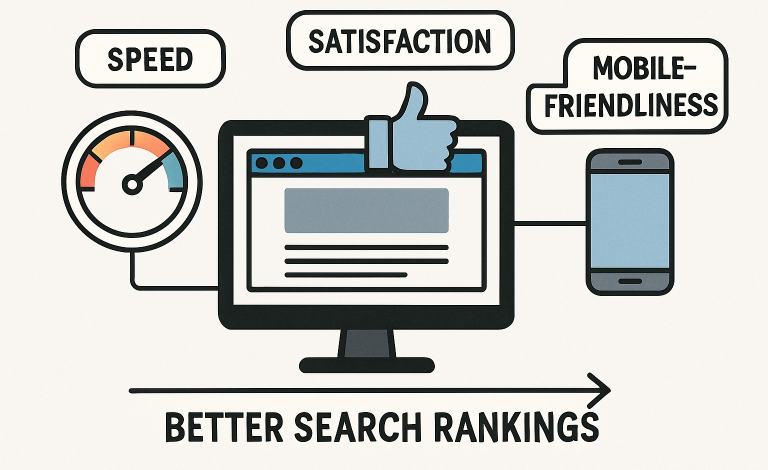
User experience (UX) has become a cornerstone of effective SEO, significantly influencing how websites rank in search engine results. With Google and other search engines constantly updating their algorithms to prioritize sites that engage and satisfy visitors, ignoring UX means missing out on critical ranking opportunities. Businesses competing for visibility must build their strategies on the foundation of seamless navigation, fast performance, and meaningful interactions—cornerstones of modern best practices. A successful user experience takes more than just a visually appealing design; it demands strategic planning so that every part of the site fosters a sense of ease and satisfaction in users. For a deeper understanding of how these principles apply in competitive industries, read more about strategies that deliver results.
Google’s algorithms have evolved to prioritize human interaction data over traditional SEO tactics, such as keyword stuffing and backlinks. This shift highlights the significance of user experience (UX) in influencing search engine rankings. Factors such as page engagement, return visits, and minor enhancements in functionality can have a significant impact on SEO outcomes. Data shows that businesses focusing on user experience, including faster load times and mobile-first design, experience higher engagement and visibility. The article examines how UX influences SEO, providing practical strategies for aligning these disciplines to enhance traffic and conversions by improving user satisfaction.
Understanding the Connection Between UX and SEO
Search engines are designed to serve users with the most valuable and relevant results possible. To determine which sites best meet this goal, algorithms measure a variety of UX factors, including page load speed, mobile adaptability, and user-friendliness in finding information. When a website delivers positive interactions—clear layouts, fast responses, and intuitive interfaces—users stay longer, engage more, and are less likely to bounce, all of which are positive signals to search engines. The best-performing websites are often those where the lines between SEO and UX are blurred, as both teams work closely together to deliver seamless experiences. This holistic approach not only drives more organic traffic but also encourages deeper engagement from every visitor.
Key UX Factors Affecting Search Rankings
- Page Load Speed
Slow sites lose visitors fast. In fact, research from Google’s Search Central Blog shows that as page load time increases from one to three seconds, the probability of a visitor bouncing grows by 32%. Optimizing images, minimizing scripts, and leveraging local caching are proven approaches to reduce load times and increase rankings. A fast-loading website not only keeps users happy but also encourages them to view more pages, increasing the likelihood of conversions. Compressing multimedia elements, prioritizing above-the-fold content, and using content delivery networks (CDNs) can make a notable impact on your speed optimization efforts. Google’s PageSpeed Insights and Core Web Vitals tools are essential for monitoring and refining site speed.
- Mobile Responsiveness
More than half of all internet traffic now comes from mobile devices, and Google’s mobile-first indexing means your site’s mobile usability directly impacts rankings. Pages should adapt seamlessly to all devices, allowing easy navigation, prompt loading, and clear visibility without the need for zoom or horizontal scrolling. Poor mobile performance often results in lost opportunities and lower search engine rankings. Responsive design frameworks, such as Bootstrap or CSS Grid, ensure that site content automatically reorganizes for different screen sizes and input methods. Effective touch targets, legible fonts, and flexible layouts all contribute to higher retention rates and more satisfied users.
- Intuitive Navigation
Clear navigation structures ensure visitors quickly find what they need, enhancing time on site and reducing exits. Logical menus, well-structured page hierarchies, and helpful breadcrumb trails all contribute to a more seamless user experience. Sites that improve their navigation often see noticeable gains in both engagement and search visibility, as visitors are encouraged to explore more content rather than abandoning the site. A well-designed site architecture not only benefits new customers trying to orient themselves but also returning visitors looking for specific information, products, or resources. Navigation best practices include minimizing the number of clicks required to reach essential pages and maintaining a consistent menu layout throughout the site.
- Content Quality and Relevance
Content that meets user intent is more likely to keep visitors engaged and satisfied. Pages must not only answer questions but also do so in an organized, approachable format—using headings, bullets, visuals, and concise language. Valuable content drives longer dwell times and higher return visits, signaling to search engines that your site deserves higher positioning. The use of multimedia, such as videos and infographics, enhances understanding and engagement, while comprehensively addressing topics helps capture long-tail keywords and a wide range of diverse search queries. Search engines reward content that provides a complete resource for users, making depth and accuracy vital factors in sustained rankings.
Behavioral Metrics and Their Impact
Search engines analyze site usage data to inform ranking decisions. The following metrics are critical indicators of your site’s user experience health:
- Bounce Rate:A high bounce rate may indicate that the content fails to meet user expectations or encounters technical issues that hinder engagement. Lowering bounce rates typically hinges on providing clear pathways, relevant information immediately, and removing potential frustrations such as excessive ads or broken links.
- Dwell Time:The amount of time users spend on a page before leaving. Longer dwell times typically indicate that the information is satisfying and engaging. Techniques for improving dwell time include embedding related links, utilizing storytelling methods, and developing comprehensive resource pages that group valuable information in one place.
- Click-Through Rate (CTR):A measure of how compelling your page title and meta description are in search results. Higher CTRs indicate that your content is well-suited to user queries. Writing attention-grabbing, concise titles and meta descriptions that accurately convey the contents of your pages is an essential step toward improving CTR and, consequently, search traffic.
These behavioral metrics can highlight pain points or strengths in your current UX and are crucial for iterative improvement. Monitoring and adapting to these trends is part of a successful, agile SEO strategy. By frequently analyzing user behavior data, businesses can identify underperforming pages, experiment with enhancements, and track which changes lead to improved engagement and higher search rankings.
Implementing UX Best Practices for SEO
- Optimize Page Speed:Achieve fast load times by compressing assets, leveraging server-side optimizations, and minimizing HTTP requests. Regularly check your site speed using available online tools, and address the issues flagged by these reports to enhance the user experience continually.
- Ensure Mobile-Friendliness:Utilize flexible, responsive design frameworks that adapt to various devices and screen orientations. Test all new features and updates across devices to guarantee consistent usability.
- Simplify Navigation:Organize information logically with straightforward menus, internal linking, and a clear path to key content. Incorporate search functionality and well-labeled categories to guide users efficiently.
- Enhance Content Quality:Structure content for readability, including headings, short paragraphs, and multimedia elements as appropriate to explain or support central ideas. Prioritize updating outdated information to maintain your site’s authority in your niche.
- Monitor User Behavior:Regularly analyze behavioral data in platforms like Google Analytics and Google Search Console to uncover user experience issues and track the impact of site changes. Set up actionable goals and conversion tracking to precisely measure improvements in both UX and SEO.
Integrating these UX principles not only helps satisfy algorithm demands but also directly impacts business outcomes, fostering sustained growth and improved customer loyalty. The ongoing process of UX refinement should remain at the forefront of your digital strategy, ensuring your website adapts as technologies and user expectations evolve.
Conclusion
Investing in user experience is crucial for any website seeking to secure—and maintain—strong search engine rankings in today’s digital landscape. By prioritizing rapid site performance, mobile accessibility, easy navigation, and high-value content, businesses can create web experiences that resonate with both search engines and visitors. Positive user interactions propel SEO performance, build trust, and set the groundwork for long-term success in organic search. Ultimately, those who focus on making their websites genuinely useful and enjoyable will always stand out in increasingly crowded search results.